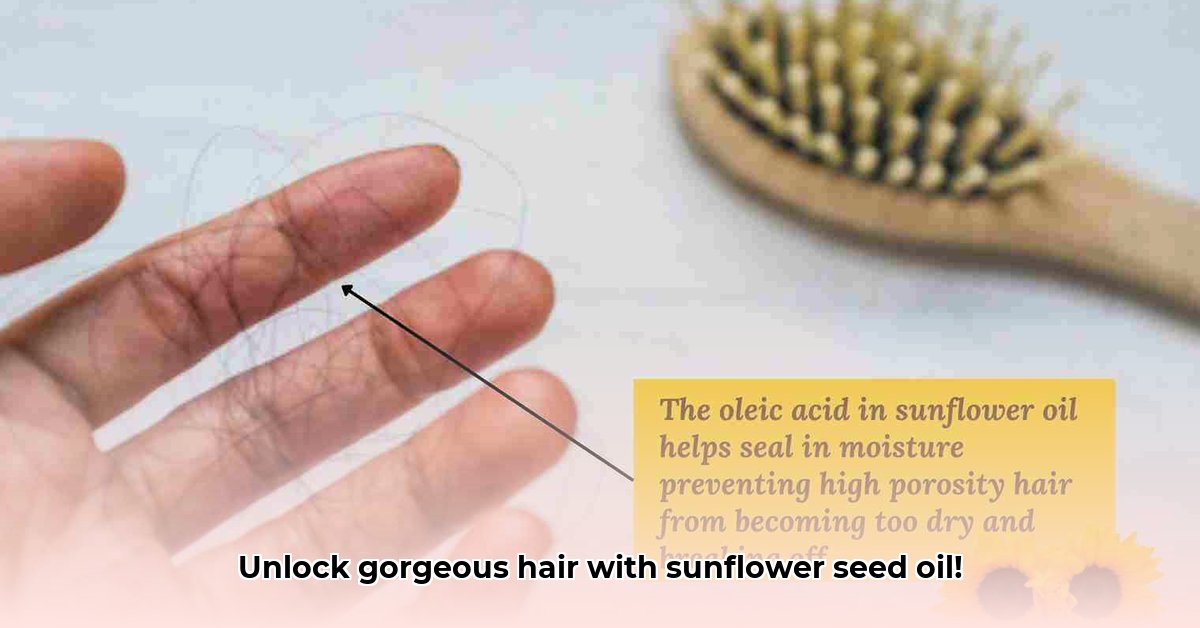
Benefits of Sunflower Seed Oil for Hair
Is sunflower seed oil the secret to achieving luscious, healthy-looking hair? While anecdotal evidence is strong, the scientific community needs more robust studies to confirm all the purported benefits. Let's explore the current understanding of sunflower seed oil's impact on hair health, separating fact from fiction.
A Nutritional Powerhouse for Hair
Sunflower seed oil boasts a potent nutrient profile beneficial for hair health. Rich in vitamin E, a powerful antioxidant, it combats free radicals that damage hair, leading to dullness and weakness. The oil also contains linoleic acid, an omega-6 fatty acid crucial for scalp health and hydration. A healthy, moisturized scalp is fundamental for strong, vibrant hair growth.
Shine, Moisture, and Improved Manageability: Examining the Evidence
Many individuals report improved hair shine, moisture, and manageability after incorporating sunflower seed oil into their hair care routines. These anecdotal reports are compelling, but rigorous scientific studies directly comparing sunflower oil to other popular hair oils are lacking. While personal experiences suggest positive effects, more research is needed to support these claims definitively. A gentle scalp massage with the oil may also improve blood circulation, potentially promoting hair growth.
Claims Requiring Further Investigation
While some enthusiastically claim dramatic hair growth acceleration or complete dandruff elimination with sunflower seed oil, substantial scientific evidence supporting these bolder claims is currently lacking. Large-scale studies are needed to corroborate these more impactful benefits.
Sunflower Oil vs. Other Oils: Understanding the Nuances
Sunflower oil and other popular hair oils, such as coconut oil, possess distinct properties and mechanisms of action. Coconut oil, rich in lauric acid, is believed to penetrate the hair shaft more effectively. Sunflower oil, conversely, tends to coat the hair, offering a protective layer. This difference in penetration and action makes the effectiveness of each oil highly dependent on individual hair type and porosity.
Potential Side Effects and Precautions
While generally well-tolerated, allergic reactions to sunflower seed oil are possible, although rare. A patch test is crucial before widespread application. Apply a small amount to a hidden area (like the inside of your elbow) and wait 24 hours to check for any adverse reactions like redness or irritation.
How to Use Sunflower Oil for Different Hair Porosities
Key Takeaways:
- Sunflower seed oil, a lightweight oil rich in beneficial fatty acids and vitamin E, offers potential benefits for hair health.
- Its moisturizing properties are widely reported.
- However, strong scientific evidence supporting dramatic hair growth or other significant benefits is limited.
- A patch test is crucial before use to assess potential allergic reactions.
- Application methods should be tailored to hair porosity for optimal results.
Understanding Your Hair Porosity
Hair porosity, the hair's ability to absorb and retain moisture, significantly impacts the effectiveness of sunflower seed oil. Three main types exist:
- Low porosity: Hair cuticles lie flat, hindering moisture penetration.
- Medium porosity: Hair cuticles are slightly raised, allowing for moderate moisture absorption.
- High porosity: Hair cuticles are widely raised, allowing for easy moisture absorption but also rapid moisture loss.
Tailoring Sunflower Oil Application to Hair Porosity
Low Porosity:
- Apply a small amount to damp hair, concentrating on the ends.
- Use gentle heat (warm towel or hooded dryer) to open the cuticles.
- Leave for at least 30 minutes before rinsing.
Medium Porosity:
- Apply to damp or dry hair, focusing on ends and mid-lengths.
- Use as a leave-in treatment mixed with styling products.
- Use as pre-shampoo treatment (30 min before washing).
High Porosity:
- Apply generously as a pre-shampoo treatment.
- Use a gentle clarifying shampoo.
- Mix a few drops into your conditioner.
Maximizing the Benefits of Sunflower Seed Oil
- Choose high-quality oil: Select cold-pressed, unrefined sunflower oil.
- Be patient: Consistent use is crucial for noticeable results.
- Listen to your hair: Adjust application frequency based on your hair's reaction.
- Combine with other ingredients: Sunflower oil can be combined with honey or aloe vera gel for potentially enhanced results.
Potential Drawbacks and Precautions
While generally safe, remember the possibility of allergic reactions. Always perform a patch test. The lightweight nature might limit deep conditioning compared to heavier oils. Avoid staining light-colored fabrics. More research is needed to fully understand its long-term effects on hair growth and health.